
In this article, you will learn how to grow garlic indoors. Growing garlic can be an exciting process that not only enriches your culinary practice with fresh ingredients but also adds a touch of greenery to your interior.
Preparing to Grow Garlic Indoors
Choosing the garlic variety is the first important step in your journey to growing garlic at home. There are two main types of garlic - winter and spring. Winter garlic is usually planted in the fall and has a spicier taste, while spring garlic is planted in the spring and has a milder flavor. For home cultivation, it is recommended to choose spring garlic as it is better adapted to limited space conditions and can be planted at any time of the year.
Preparing the container and soil is the next step. You will need a container that is at least 20 cm deep with good drainage. You can place a layer of expanded clay or fine gravel on the bottom of the container to provide additional drainage. The soil should be fertile, with a neutral pH, and well-draining. It is recommended to use specialized soil for vegetable crops or mix garden soil with compost and sand in a 2:1:1 ratio. The soil should be thoroughly moistened before planting.
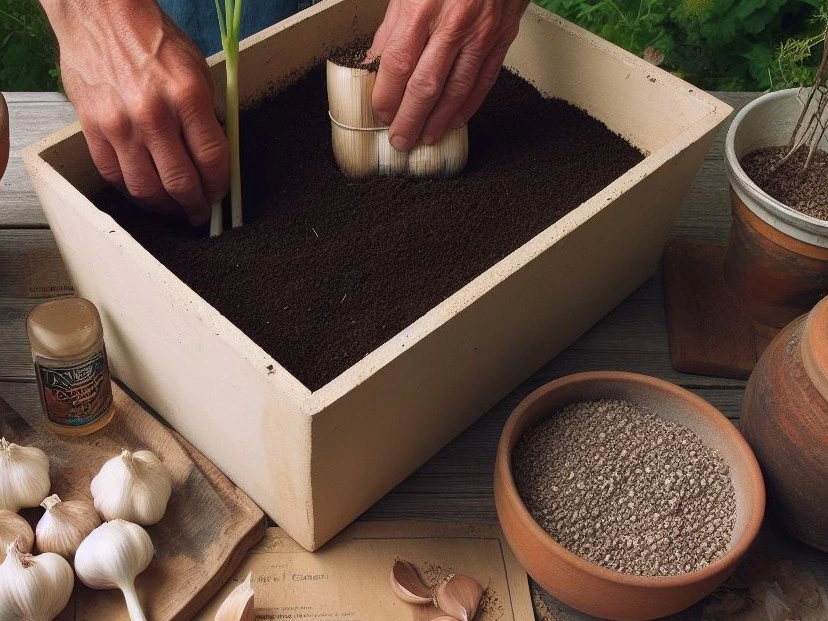
Planting Garlic Cloves
Once the container and soil are ready, you can start planting. Choose large and healthy garlic cloves, avoiding those with signs of damage or disease. Each clove should be planted with the pointed end up, to a depth of about 5 cm. The distance between cloves should be at least 10 cm to provide enough space for growth.
Make sure the soil remains moist but not overwatered in the first few weeks after planting. Garlic prefers consistent watering, so it is important to maintain a steady level of soil moisture. After planting garlic, place the container in a location where the plant will receive an adequate amount of sunlight - a windowsill on the south side of the house is ideal.
Caring for Garlic
Caring for garlic indoors does not require much effort but does require attention. Water the garlic regularly to keep the soil moist but not waterlogged. Typically, watering once a week is sufficient, but this may vary depending on the conditions in your home. If the top layer of soil feels dry to the touch, it's time to water.
Adequate sunlight is key to healthy garlic growth. The plant should receive at least 6 hours of direct sunlight daily. If natural lighting is insufficient, especially in the autumn-winter period, consider using artificial lighting.
To prevent problems with pests and diseases, regularly inspect the plants for signs of damage. Common issues include insect pests such as aphids and fungal diseases such as mildew. When pests are detected, use mild insecticides, and for diseases, use fungicides. Also, ensure good air circulation around the plants to minimize the risk of fungal infections.
Harvesting
Garlic is ready for harvest when most of the leaves turn yellow and begin to wither, which usually happens at the end of summer. To confirm readiness for harvest, carefully dig up a few cloves and check their size. The cloves should be firm and fully formed.
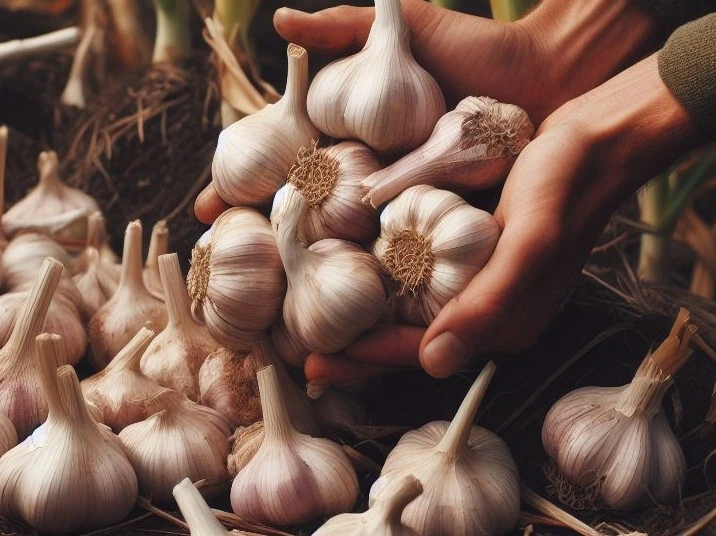
After harvesting garlic, it needs to be dried. You can leave the plants in a dry, well-ventilated place for a few days, avoiding direct sunlight. After drying, trim the stems and roots, and store the garlic in a cool, dry place. Proper storage will help preserve the harvest for several months.
Frequently Asked Questions:
-
How long does it take to grow garlic? Growing garlic from planting to harvest usually takes about 4-5 months. Fall-planted garlic will be ready for harvest in early summer, while spring-planted garlic will mature by the end of summer.
-
Is special care needed in winter? In winter, when days are shorter and there is less light, your garlic may require additional lighting. It is recommended to use grow lights to maintain an adequate level of light. It's also important to ensure that the soil doesn't become too cold if your window is not protected from frost.
-
How to deal with common garlic diseases? To prevent diseases, it is recommended to maintain good ventilation around the plants and avoid overwatering the soil. If you notice signs of fungal diseases, such as leaf spotting, apply fungicides according to the instructions. Pest control involves regular inspection of plants and, if necessary, the use of insecticides or home remedies such as soapy water.
Tips for Storing Garlic
1. Optimal Storage Conditions
- Temperature and Humidity: Store garlic in a dry and cool place at a temperature of around 15-18°C. Avoid high humidity areas, as it can lead to garlic spoilage.
- Ventilation: Ensure good ventilation. Store garlic in ventilated containers, mesh bags, or baskets.
2. Avoid Plastic Bags
- Mold and Moisture: Plastic bags can trap moisture, which can lead to mold growth. Instead, use paper bags or cloth pouches.
3. Long-Term Storage Methods
- Freezing: Frozen garlic can last for several months.
- Chopped Garlic: Chop garlic and freeze it in ice cube trays with a bit of water or olive oil.
- Garlic Paste: Mix chopped garlic with a small amount of olive oil and salt, then freeze.
- Drying: Dried garlic is also a good long-term storage option. Dry garlic in a dehydrator or oven at low temperatures, then store in airtight containers.
4. Storing Whole Bulbs
- Hanging: Whole garlic bulbs can be hung in a dry, dark place. This method is suitable for storing the harvest for several months.
- Boxes or Baskets: Store whole bulbs in cardboard boxes or woven baskets, ensuring good ventilation.
5. Quality Checking Tips
- Regularly check your garlic supplies for signs of spoilage or sprouting. Discard any spoiled or sprouted cloves to prevent rot from spreading.
6. Using Sprouted Garlic
- If garlic has started to sprout, you can still use it. Sprouted cloves often have a milder flavor and are suitable for soups or braised dishes.
Growing garlic at home is a wonderful way to add more greenery and freshness to your life. Starting with simple preparation and planting steps, you can produce a harvest that not only delights your taste buds but also gives you the satisfaction of growing it yourself. Homegrown garlic is not only the joy of self-sufficiency but also the confidence in the quality of the product you consume. Set aside a little space on your windowsill, show some care, and your home will be filled with the aroma of fresh green garlic leaves. We encourage you not to be afraid to experiment and start your journey to self-sufficiency by growing garlic today!
 Slovenščina
 Čeština
 Norsk (Bokmål)
 中文(简体)
 Русский
 Español
 Українська
 Bahasa Indonesia
 Français
 Português
 Italiano
 Türkçe
 Nederlands
 Deutsch
 Svenska
 Română
 Polski
 Magyar
 Български
 Dansk
Dansk
 Latviešu
 Suomi
Suomi
 Slovenčina
 Lietuvių
 한국어
한국어
 Ελληνικά
 Eesti
Eesti
 日本語
日本語