
In September, Germany still offers time for fast crops and for establishing greens that will grow in autumn and winter. The most reliable choices for open ground are lambs lettuce, spinach, radishes, winter purslane and some Asian greens. At the beginning of the month, the last seedlings of endive, radicchio, sugarloaf and pak choi can also be planted. In October the choice becomes smaller: in open ground, rely mainly on hardy crops, while in colder regions use a greenhouse or fleece.
These are practical guides for the 2026 season, not fixed dates for every garden. Bavaria, the coast, lowlands and upland areas have different conditions. Use soil temperature, the forecast for the first frosts and the instructions on the seed packet to make the final decision.
What to sow and plant in September
September is a good month for refilling beds after cucumbers, courgettes, early potatoes and summer salads. The soil is still warm, while evaporation usually slows down. If the bed is dry, water it thoroughly, level the surface and then make the drills. Small seeds need a moist layer of soil, or the short autumn window may be lost.
A practical calendar for September 2026
| Period | What to do | Conditions and likely result |
|---|---|---|
| 1–10 September | Lambs lettuce, spinach, radishes, winter purslane and Asian greens. Plant young endive, radicchio, sugarloaf and pak choi. | The best period for open ground. Keep the seedbed evenly moist until emergence. |
| 11–20 September | Lambs lettuce, spinach varieties for autumn sowing, winter purslane and cut-and-come-again salads. Radishes are still possible in mild areas. | Choose fast-growing varieties. Cover the bed with light fleece if temperatures fall. |
| 21–30 September | Lambs lettuce and winter purslane in a sheltered place, plus green manure on empty beds. In a greenhouse, try spinach and Asian greens. | Results outdoors are less predictable. Late sowing needs shelter and a mild autumn. |
Which crops to choose for September
Lambs lettuce
Lambs lettuce, known in Germany as Feldsalat, is one of the most useful late crops. Sow it in rows so that weeding is easier in spring, or plant small ready-grown plugs. A sowing in early or mid-September can form rosettes before winter and continue slowly in mild weather. In October, planting seedlings under cover is more reliable than waiting for fresh seed to germinate quickly.
Spinach
Choose spinach varieties intended for autumn or winter growing. The Bayerische Gartenakademie places the useful outdoor sowing window for an autumn and November harvest up to mid-September. Later seed may germinate, but the plants may remain small and a pre-winter harvest is not guaranteed. Sow in rows about 25 cm apart so that you can hoe without damaging the plants.
Radishes, winter purslane and Asian greens
Radishes can give a quick crop, but a late sowing depends on the variety and temperature. In a warm September they work well for a short crop; early cold may leave the roots small. Winter purslane and Asian greens are useful for autumn leaf harvests. Sow small batches a few days apart so that everything does not mature at once.
Endive, radicchio, sugarloaf and pak choi
If early September has already passed, buy young plants rather than sowing these crops from scratch. At the beginning of the month, the last plants can still go into open ground, especially in a warm, sheltered spot. Leave enough space for air movement. Cabbages and salads should not remain permanently wet under dense plastic, as this increases the risk of rot.
Green manure
If you no longer need another vegetable harvest, do not leave the bed bare. Fast-growing and winter-hardy green manure covers the soil and helps retain available nutrients. Check the crop rotation before choosing a mix: after cabbages, do not automatically use mustard or oilseed rape because they are also brassicas. Choose another plant family and check the seed mix instructions.
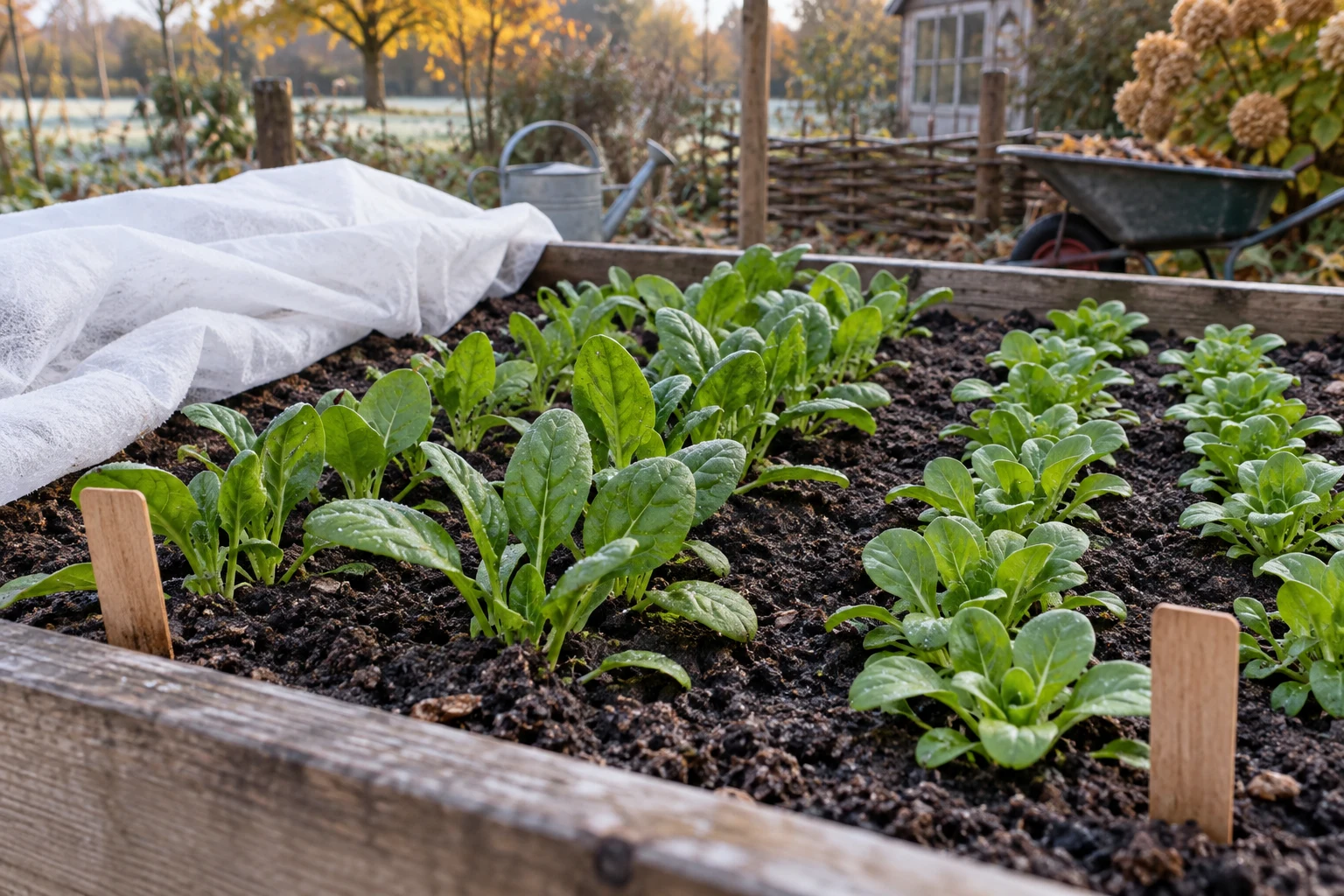
After sowing, gently firm the soil with your hand or a board so that the seed touches the moist layer. Water with a fine rose and check the bed every day until seedlings appear. A hard crust after watering is worse than moderate moisture, so cover the surface lightly with mature compost or use a fine watering can.
What to plant in October
In October, the aim changes. The priority is no longer a large harvest before November, but crops that can withstand cold or grow under protection. On open ground, the timing depends strongly on the region: the Rhine area and other mild locations have a longer window, while exposed upland and continental sites may see the first frost in the first half of the month.
A practical calendar for October 2026
| Period | Open ground | Greenhouse or cover |
|---|---|---|
| 1–10 October | Plant lambs lettuce seedlings, sow winter purslane and, in a mild region, early green manure. A small sowing of winter spinach is possible. | Continue sowing spinach, Asian greens and cut-and-come-again leaves. |
| 11–20 October | Plant only strong seedlings of winter salads and greens. Cover empty beds with green manure or mulch. | Plant lambs lettuce and ventilate on sunny days. |
| 21–31 October | New vegetable sowings usually do not have time to produce a meaningful crop. Plant suitable winter crops only if the variety allows it. | Keep overwintering plants, remove diseased leaves and prepare cover for cold nights. |
Vegetables and greens that can overwinter
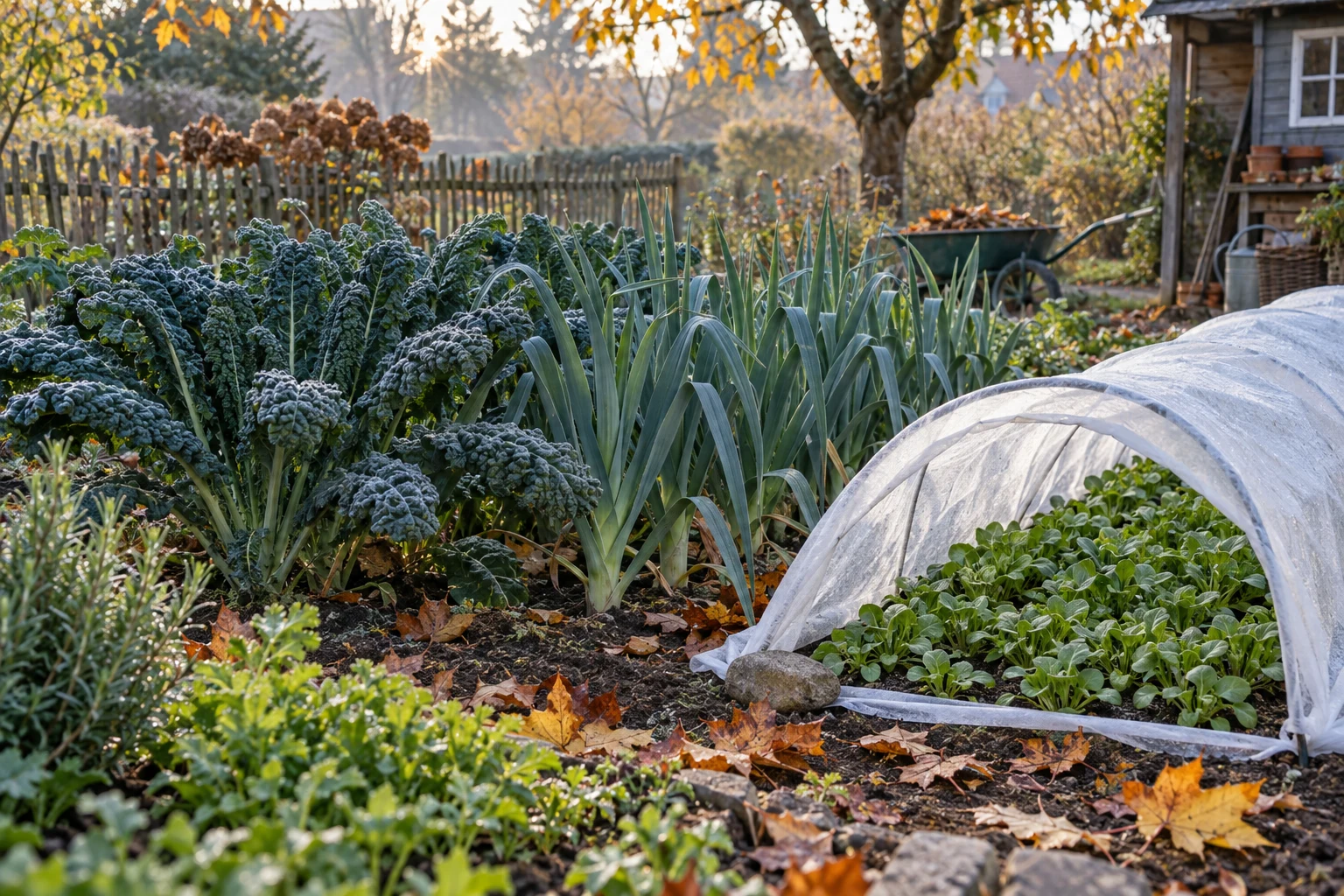
An overwintering crop does not grow actively all winter. Growth slows in short days and low temperatures, and harvesting is done during suitable mild spells. Choose varieties that explicitly mention winter hardiness and keep fleece ready. Solid plastic without ventilation is not a substitute for cover: moisture builds up and leaves may rot.
- Lambs lettuce. It remains one of the easiest autumn crops. Harvest it in portions without pulling out every rosette.
- Spinach. An autumn sowing can provide late autumn and early spring leaves, but a very late sowing may produce only small plants.
- Winter purslane and Asian greens. They work well in protected beds and for cutting young leaves. Use cover during severe frost.
- Winter salads and leafy brassicas. Established plants tolerate cold better than young seedlings. Do not plant them into wet, heavy soil in October.
- Leeks. They are usually established earlier, but strong plants can remain in the bed. Protect the root zone from drying and sharp temperature changes.
- Winter garlic. This is a clove planting rather than a sowing for greens. Follow the variety instructions and choose a well-drained bed.
How to prepare an autumn bed
Prepare the bed before sowing or planting. Autumn crops need a clean, level seedbed and good drainage more than a heavy dose of fertiliser.
- Remove diseased plant material. Healthy roots and leaves can go into a well-aerated compost heap. Keep diseased parts away from the new bed.
- Do not dig without a reason. For an empty bed, remove weeds, level the surface and cover it with plant material or green manure. Late deep digging can increase nutrient leaching.
- Check drainage. In autumn, standing water is often more dangerous than a short dry spell. Use a raised bed or mature compost on heavy soil.
- Respect crop rotation. Do not return the same plant family to the same place without a break. Pay particular attention after cabbages, onions and spinach.
- Prepare cover early. Keep fleece, hoops, pegs and clips beside the bed before the first cold night. Leave space for ventilation.
If you are choosing between an October sowing and an empty bed, start with your goal. Lambs lettuce and established winter greens are for food. Green manure is better for soil protection. Winter crops are an option for spring, but only with a suitable variety and loose, well-drained soil.
Care and protection from cold
In autumn, plants more often suffer from poor water and air management than from a lack of fertiliser. Water in the morning when the soil is genuinely dry. Wet leaves stay cold longer at night. Thin seedlings after emergence: crowded spinach and salads ventilate poorly and are more prone to disease.
Fleece protects against light frost and cold wind, but it is not a heater. Open a tunnel or greenhouse on sunny days to remove condensation. Avoid late evening watering. In areas with severe frost, cover established crops with healthy dry leaves or another breathable material when the crop allows it.
What not to sow in September and October
Tomatoes, cucumbers, courgettes, pumpkins, beans and other heat-loving crops will not reliably complete their cycle outdoors in Germany in autumn. Plastic can delay damage for a few nights, but it cannot replace the light and warmth needed for growth. Ordinary carrots, beetroot and late cabbages also usually need a longer season.
A late sowing makes sense only when the packet specifically mentions autumn or winter sowing, a short time to harvest or protected cultivation. If that information is absent, choose lambs lettuce, autumn spinach or green manure instead.
A short September and October plan
- Early September: Clear finished crops, sow lambs lettuce, spinach and radishes, and plant the last autumn salads.
- Mid-September: Repeat small leaf-crop sowings, check emergence, prepare fleece and decide which beds need green manure.
- Late September: Keep only crops with a realistic autumn window outdoors and move late sowings into a greenhouse.
- Early October: Plant strong lambs lettuce seedlings, sow winter purslane and green manure in mild areas, and prepare winter plantings.
- Mid to late October: Do not overload the beds with new sowings. Cover overwintering plants and ventilate the protection.
Questions and answers
Can spinach be sown in Germany in October?
At the beginning of October it is possible in a mild region or under cover, using an autumn variety. Reliability is lower than with a sowing before mid-September. At the end of October, a winter crop or green manure is usually the safer choice.
When is the latest time to plant lambs lettuce?
Strong seedlings can often be planted outdoors until mid-October if the soil is not waterlogged and no long severe cold spell is expected. Seed sowing needs more time, so October sowing is safer under glass or a ventilated cover.
What can I sow on an empty bed when vegetables are no longer needed?
Use a fast-growing green-manure mix suited to the remaining time and your crop rotation. After cabbages, check that the mix contains no brassicas.
Do lambs lettuce and spinach need fleece?
Fleece helps during light night frosts and cold wind. Open it on warm sunny days. Constant condensation under the cover can be more damaging than a short cold spell.
How should I adjust the calendar for different German regions?
Use your local microclimate as well as the federal state. A south-facing wall, sheltered courtyard and greenhouse can add a few days, while an exposed upland site loses them.
Sources and review date
Reviewed on 15 September 2026. Dates are practical guides for a private garden in Germany. The variety, soil, region and weather forecast can change the result.
- Bayerische Gartenakademie: Nachnutzung der Beete: Autumn salads, lambs lettuce, spinach, radishes, winter purslane and green manure.
- Bayerische Gartenakademie: Gemüsearten zur Nachkultur: Approximate sowing, planting and harvesting periods.
- Bayerische Gartenakademie: Der Naturgarten im Herbst: Late sowings, winter-crop protection and fleece.
- Bayerische Gartenakademie: Der Garten im Herbst: The last salad and green plantings in early September.
- Gartenakademie Rheinland-Pfalz: Übersicht der Gemüsearten für den Hausgarten: A reference table for vegetable crops and growing periods.
 Slovenščina
 Čeština
 Norsk (Bokmål)
 中文(简体)
 Русский
 Español
 Українська
 Bahasa Indonesia
 Français
 Português
 Italiano
 Türkçe
 Nederlands
 Deutsch
 Svenska
 Română
 Polski
 Magyar
 Български
 Dansk
Dansk
 Latviešu
 Suomi
Suomi
 Slovenčina
 Lietuvių
 한국어
한국어
 Ελληνικά
 Eesti
Eesti
 日本語
日本語